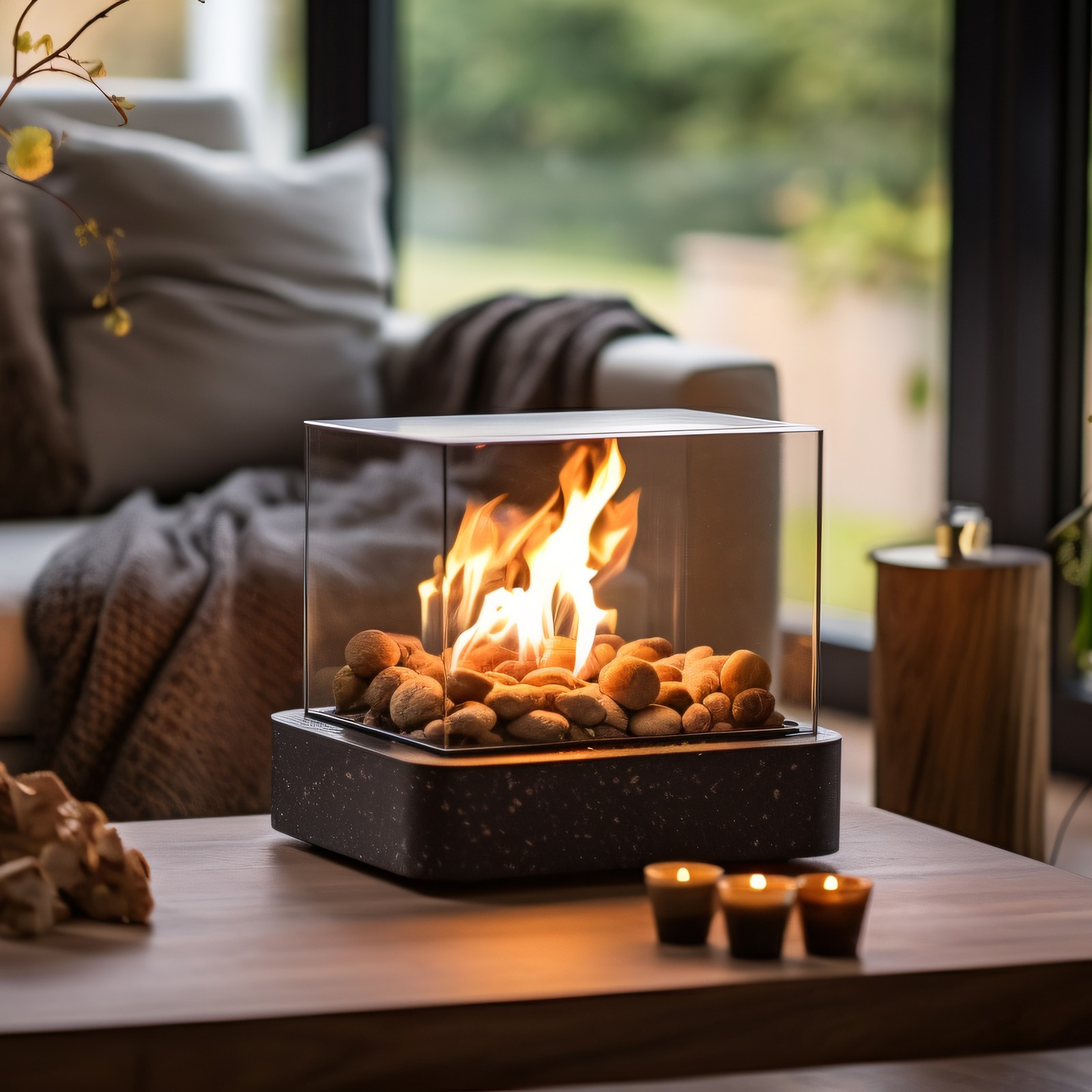
Bioethanol fires have grown rapidly in popularity over the past few years — especially in modern homes, apartments, and renovations where installing a chimney or gas supply simply isn’t practical.
At The Firecraft Centre in Shropshire, we’re seeing more homeowners asking for real flame ambience without structural work. Bioethanol offers exactly that.
So what’s the best type of bioethanol fire available?
The answer depends on your space, safety expectations, and whether you want a bold feature piece or a subtle architectural flame line. Below is a full guide to the best options on the market.
1. Inset Bioethanol Fires (Best for Media Walls & Contemporary Features)
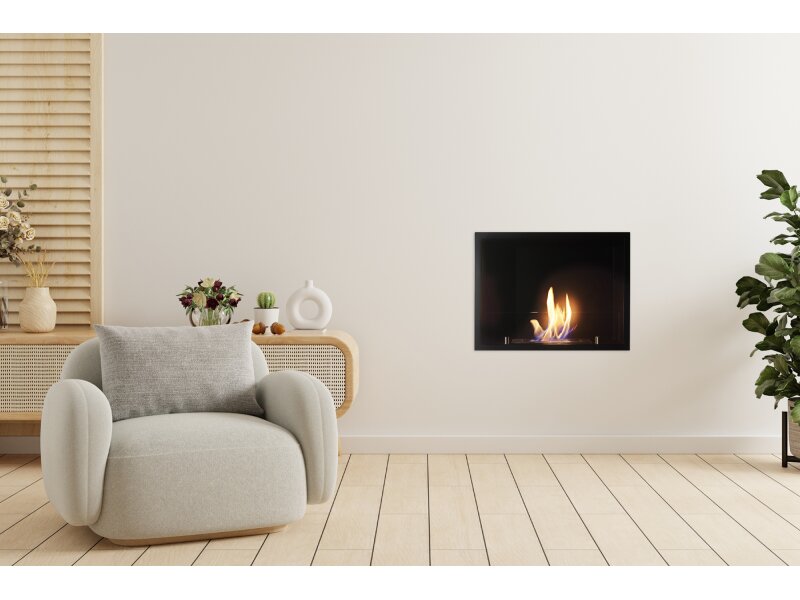
Best for: Media walls, bespoke chimney breasts, statement living rooms.
Inset bioethanol fires are built directly into a wall or media feature, creating a sleek ribbon of real flame without the need for a flue.
Why they’re popular:
- Clean, frameless appearance
- Real flame without chimney or gas
- Ideal for modern renovations
- Can be installed almost anywhere
These models often use longer, linear burners to create a panoramic flame effect — perfect beneath a wall-mounted TV or within a minimalist interior.
Top Tip: Choose models with automatic burners and safety shut-off systems for peace of mind.
2. Wall-Mounted Bioethanol Fires (Best for Apartments)
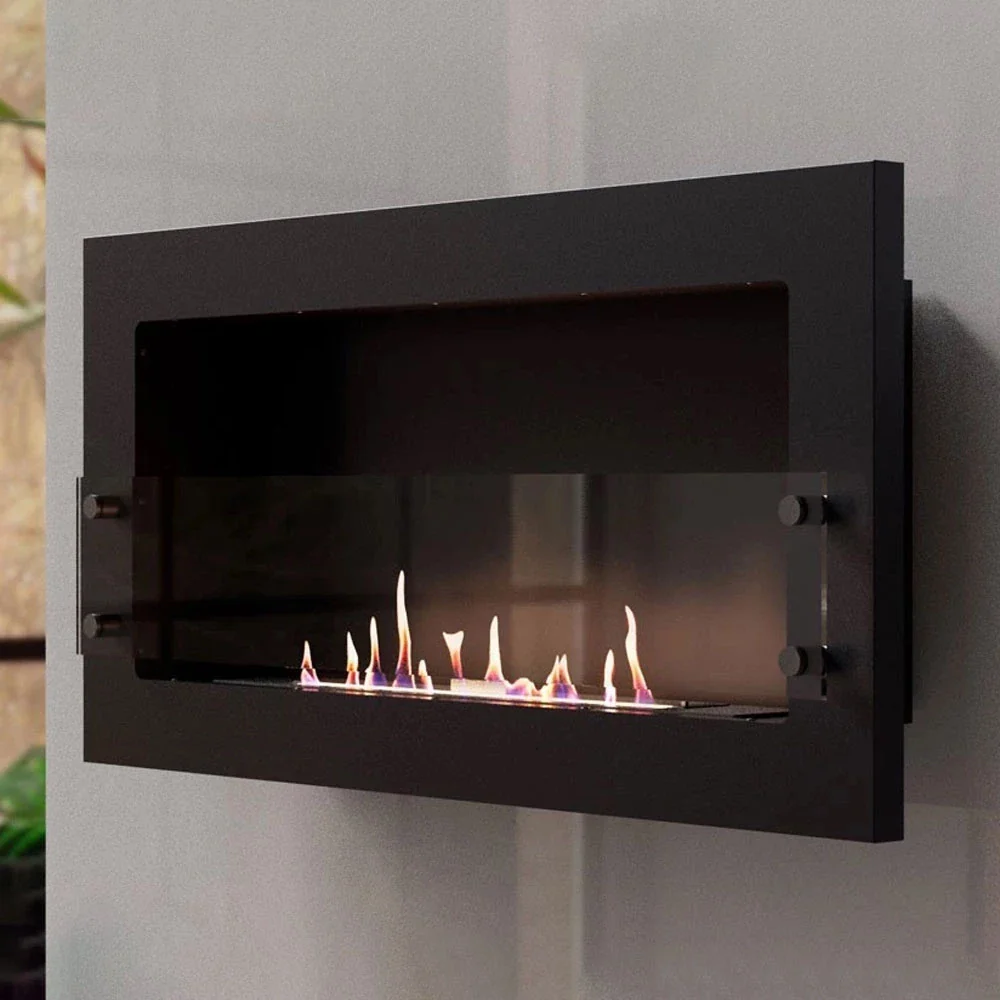
Best for: Flats, smaller rooms, quick installation.
Wall-mounted bioethanol fires fix directly to the wall surface, similar to hanging a television.
Advantages:
- No recess required
- Slim profile
- Modern aesthetic
- Ideal where floor space is limited
These are particularly popular in urban apartments where structural alterations aren’t allowed.
3. Freestanding Bioethanol Fires (Best for Flexibility)
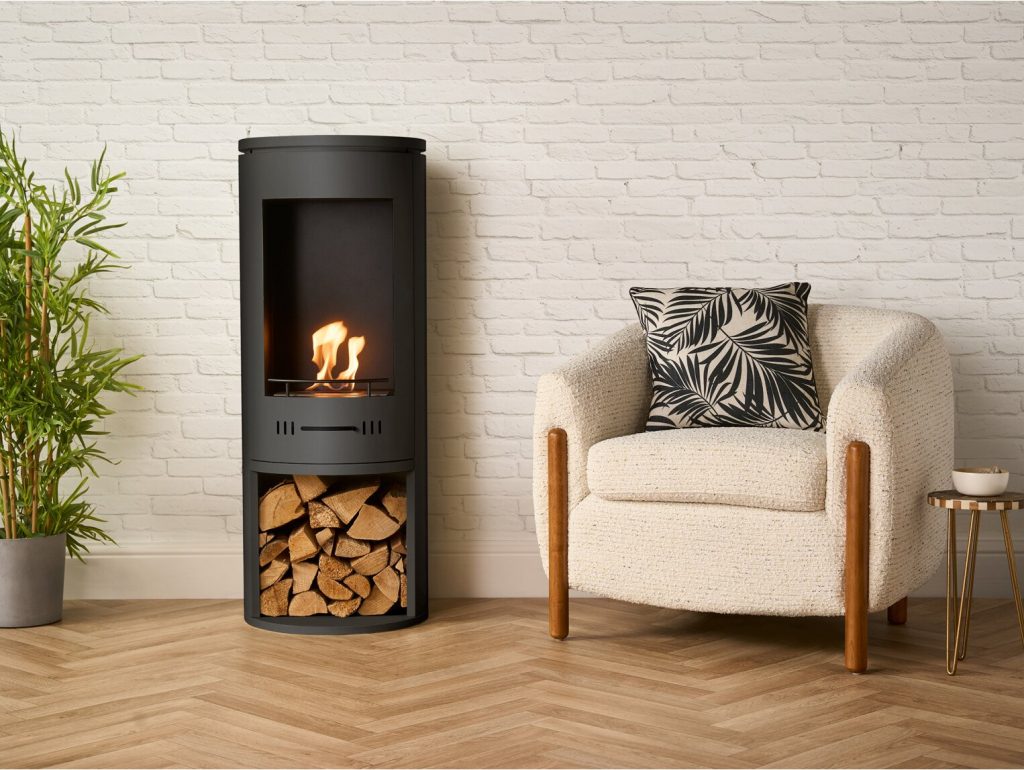
Best for: Flexible layouts and open-plan rooms.
Freestanding ethanol fires can be positioned almost anywhere — no flue, no gas pipe, no chimney.
They:
- Act as movable feature pieces
- Often include glass side panels
- Provide 360° flame visibility in some models
This is a great solution if you want the ambience of fire without committing to permanent building work.
4. Bioethanol Stove-Style Fires (Best for Traditional Charm Without a Flue)
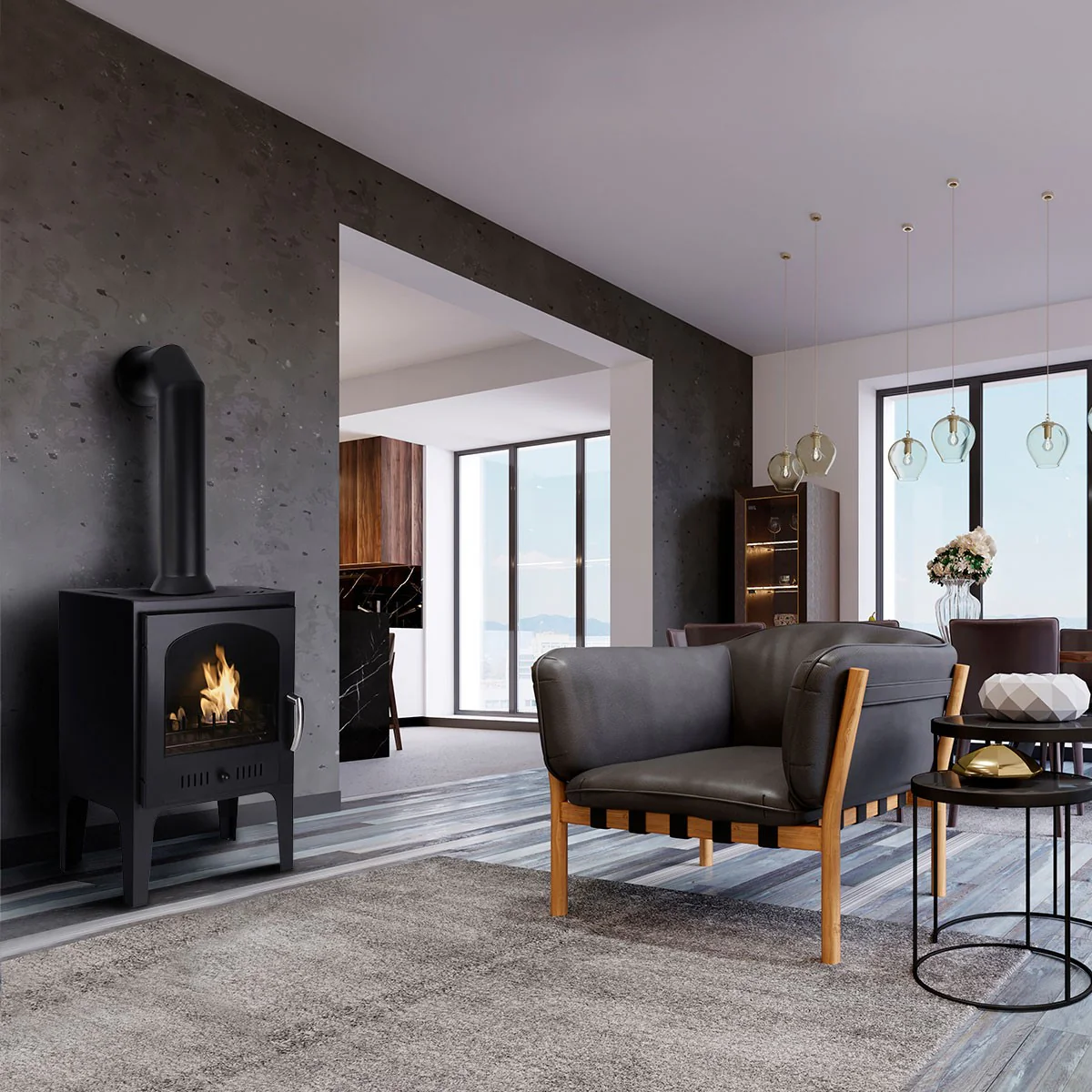
Best for: Period-style homes without chimneys.
These replicate the look of a traditional wood-burning stove but run on liquid ethanol fuel.
Why choose this type?
- Classic appearance
- No chimney lining required
- Lower installation cost than wood burners
It’s ideal for homeowners who love the stove aesthetic but don’t want the maintenance of solid fuel.
Manual vs Automatic Bioethanol Burners
When choosing the best bioethanol fire, the type of burner is just as important as the style.
Manual Burners
- Filled by hand
- Lit with a lighter
- Lower cost
- Basic safety features
Automatic (Electronic) Burners
- Remote control operation
- Built-in safety sensors
- Fuel level monitoring
- Automatic shut-off
For most modern homes, automatic burners offer the safest and most refined experience.
Are Bioethanol Fires Safe?
When installed and operated correctly, yes.
They:
- Do not produce smoke or soot
- Do not require a flue
- Burn clean bioethanol fuel
However:
- They produce heat and open flame
- Adequate room ventilation is required
- They are not typically designed as primary heat sources
Always follow manufacturer guidance and never refill a hot burner.
Heat Output Expectations
Bioethanol fires generally produce moderate heat — enough to warm a room but not usually suitable as the sole heating system.
If strong heat output is a priority, gas or wood-burning may be better options. Bioethanol excels in ambience and design flexibility.